
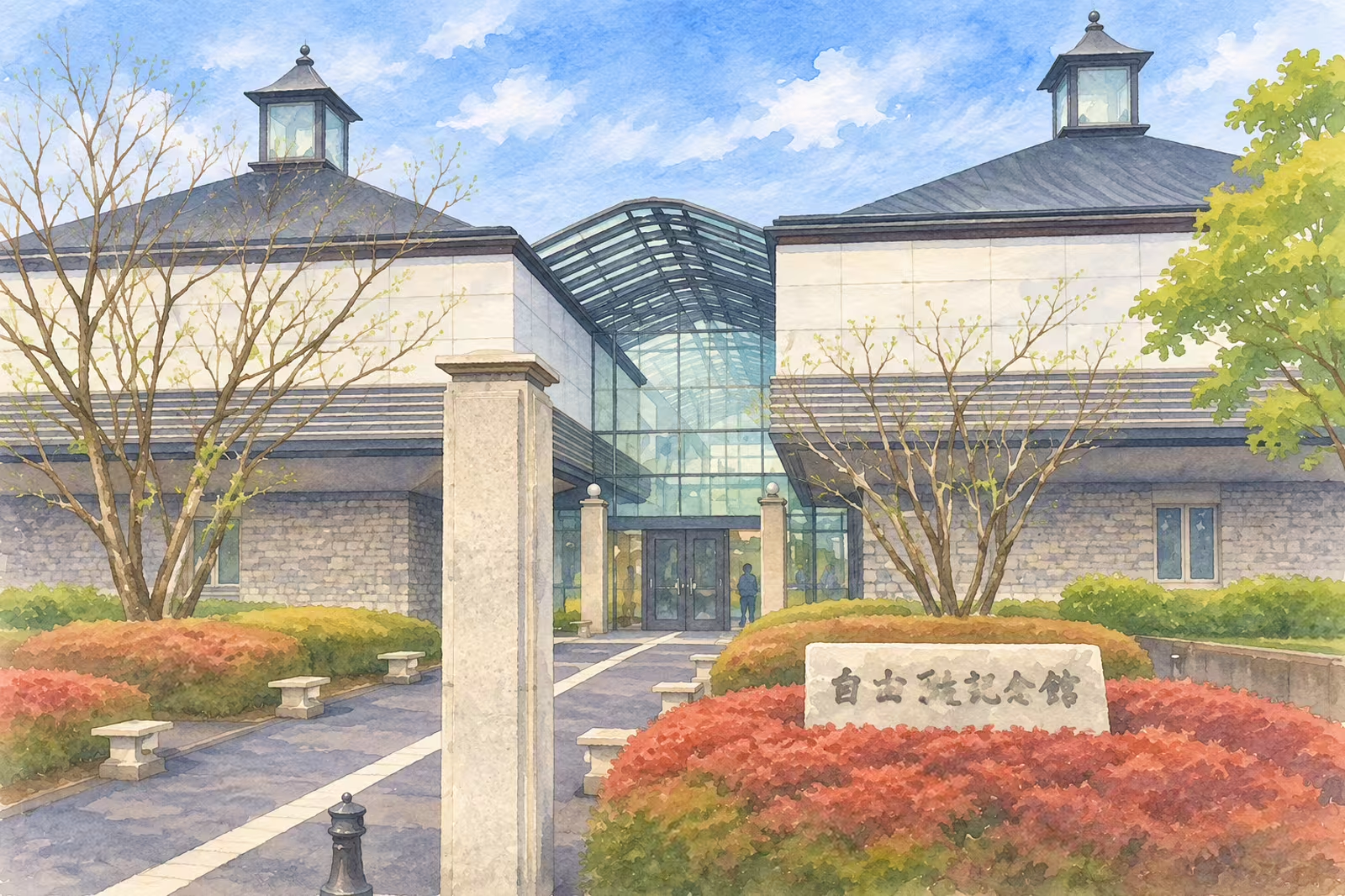
Kōchi City, in Kōchi Prefecture, was one of the birthplaces of the Freedom and People’s Rights Movement of the early Meiji era, and the hometown of its best-known leader, Itagaki Taisuke. The Kōchi City Freedom and People’s Rights Memorial Museum collects and displays material on the movement, and markers for Itagaki’s birthplace, the site of the Risshisha society, and a statue of Itagaki are scattered across the city. Together they explain why Kōchi calls itself the "home of freedom and people’s rights."
01Itagaki Taisuke and the Risshisha
Itagaki was born in 1837 into an upper-samurai family in the castle town of Kōchi, in Tosa domain. He led Tosa troops in the Boshin War and became a councillor (sangi) in the Meiji government. He resigned in 1873 over the dispute about sending a mission to Korea, and the following year joined Gotō Shōjirō and others in submitting a memorial calling for an elected national assembly. That same year he returned to Kōchi and, with Kataoka Kenkichi, Hayashi Yūzō and others, founded the Risshisha, which ran study meetings and published journals and became a model for political societies elsewhere. In the 1880s the movement spread nationwide; in 1881 the government promised to open a national assembly, and Itagaki formed the Liberal Party (Jiyūtō). In 1882 he was stabbed and wounded while speaking in Gifu, and he was reported to have said, "Itagaki may die, but liberty will not," a phrase that became famous.
02The museum and the sites
The memorial museum opened in 1990. It displays documents, newspapers, speech-meeting materials and photographs from the movement, and covers local figures such as Ueki Emori, who drafted a private constitution. It is said to hold objects connected with the Gifu attack. The building is modern.
Itagaki’s birthplace in central Kōchi is marked only by a monument; the house does not survive. The site of the Risshisha is likewise marked by a stone. Itagaki’s bronze statue stands inside the Ōtemon gate of Kōchi Castle; the present figure is generally thought to be a postwar recasting, the original having been removed for metal collection during the war. All of these are later memorials, and almost no buildings from the movement’s own time remain.