
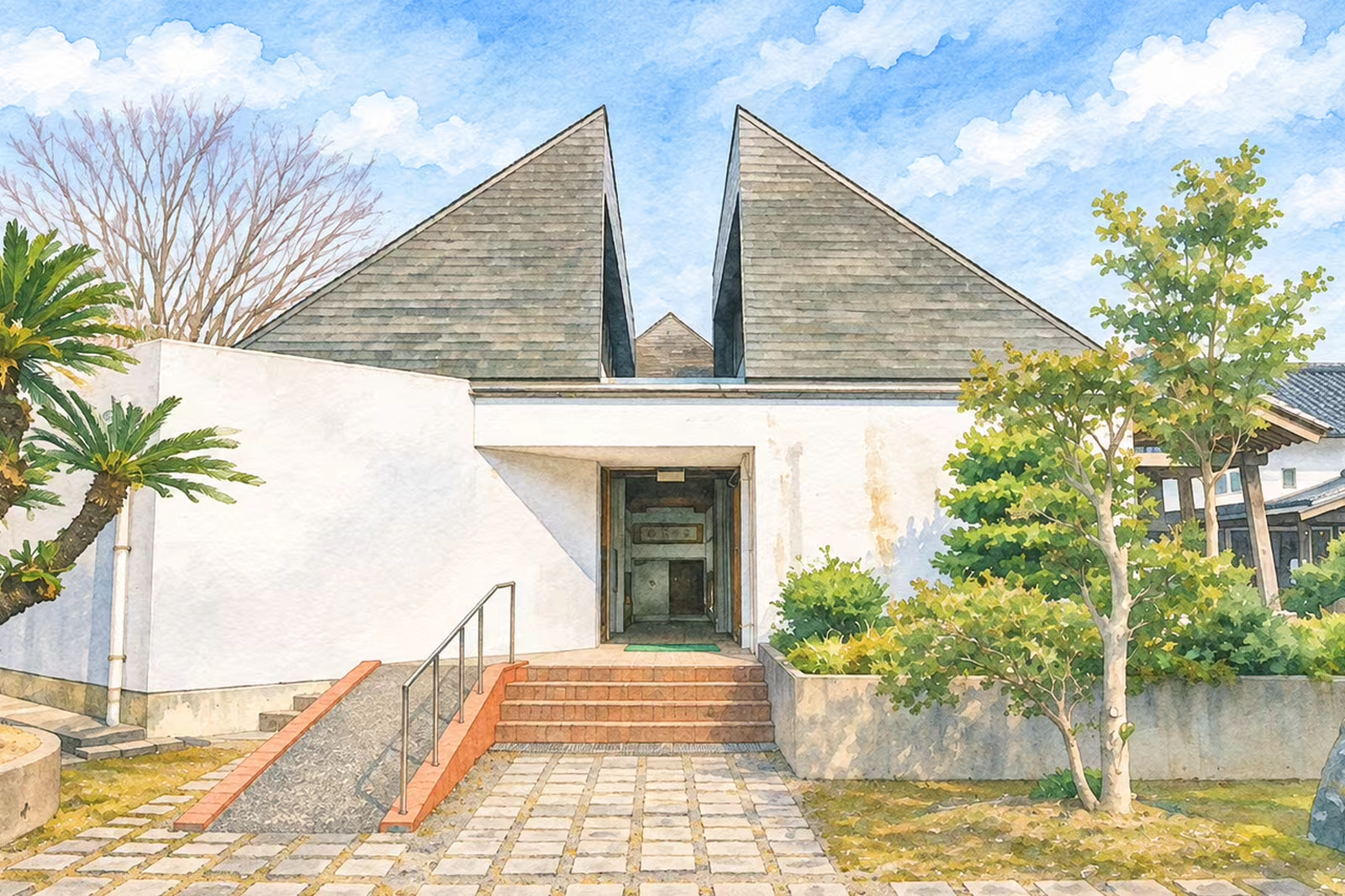
Nakanoshima, one of the Oki Islands in Ama Town, Oki District, Shimane Prefecture, is where the retired emperor Go-Toba lived out his exile after the Jōkyū War. His residence site, his cremation mound, Oki Shrine and the Go-Toba-in Museum in Ama all lie close together and form a single group of sites tied to medieval banishment. The island is far from Kyoto, yet it holds the last years of one of the major figures in the history of Japanese poetry.
01The Jōkyū War and exile
Go-Toba was the central figure of the Kyoto court in the early Kamakura period and the driving force behind the poetry anthology Shin kokin wakashū. In 1221 he raised troops against Hōjō Yoshitoki, regent of the Kamakura shogunate. The rising collapsed in less than a month and is known as the Jōkyū War. The shogunate exiled Go-Toba to Oki, and the other two retired emperors, Tsuchimikado and Juntoku, were sent to Tosa (later moved to Awa) and Sado.
Go-Toba spent about eighteen years on Nakanoshima and is said to have lived at a local temple called Genpuku-ji. He kept writing poetry and pared down the Shin kokin wakashū into what is usually called the Oki edition. A well-known poem said to date from this period begins Ware koso wa / niijima mori yo, in which he calls himself the new guardian of the island and asks the rough winds and waves of the Oki sea to blow with care. He died on the island in 1239 at the age of 58 (60 by traditional count). His body was cremated there, and part of his remains was later taken to Ōhara in Kyoto for burial. About a century later, Emperor Go-Daigo was also exiled to Oki during the Genkō War.
02What can be seen today
The site of Genpuku-ji is now open ground with markers. No medieval buildings survive, and the temple itself was abandoned in the anti-Buddhist movement of the early Meiji period. The cremation mound is managed by the Imperial Household Agency and enclosed by stone walls; visitors generally pay respects from outside. According to local tradition, the Murakami family looked after it for generations. Oki Shrine, dedicated to Go-Toba, was founded in 1939 for the 700th anniversary of his death. Nearby, the Go-Toba-in Museum in Ama shows documents, poetry materials and swords donated in later centuries, presenting him as a poet, a lover of swords and a political figure. Around the residence site are Katsuta Pond and several poem monuments, most of them erected in modern times.