
Nagaoka-kyō was the capital Emperor Kanmu built after leaving Heijō-kyō (Nara) in 784. It served as the capital for about ten years, until the court moved again to Heian-kyō (Kyoto) in 794. The city spread across what are now Mukō, Nagaokakyō and the southwestern edge of Kyoto city in Kyoto Prefecture, with the palace, Nagaoka-kyū, centered in Mukō. The decade at Nagaoka is easy to overlook between the Nara and Heian periods, but much of the shift from Nara to Kyoto happened here.
01Why Nagaoka
Kanmu descended from the line of Emperor Tenji, and after taking the throne he wanted to break free of the old interests of Heijō-kyō, including its powerful temples, by founding a new capital. Nagaoka lay near the point where the Katsura, Uji and Kizu rivers join to form the Yodo, so goods could be shipped by water directly to the city. Construction, led by Fujiwara no Tanetsugu, moved quickly. Excavations suggest that some building materials and roof tiles were taken from the Naniwa Palace.
02Tanetsugu’s assassination and the abandonment of the capital
In 785 Fujiwara no Tanetsugu was assassinated while supervising the works. The investigation implicated the crown prince, Prince Sawara, Kanmu’s younger brother. Sawara was stripped of his position and died after refusing food while being taken into exile in Awaji Province. In the years that followed, several members of Kanmu’s family died, the new crown prince, Prince Ate, fell into a long illness, and the city suffered floods. Talk spread at court that Sawara’s vengeful spirit was to blame. In 793 the court decided to build another capital, and the following year it moved to Heian-kyō. Nagaoka-kyō is generally thought never to have been fully completed.
03What can be seen today
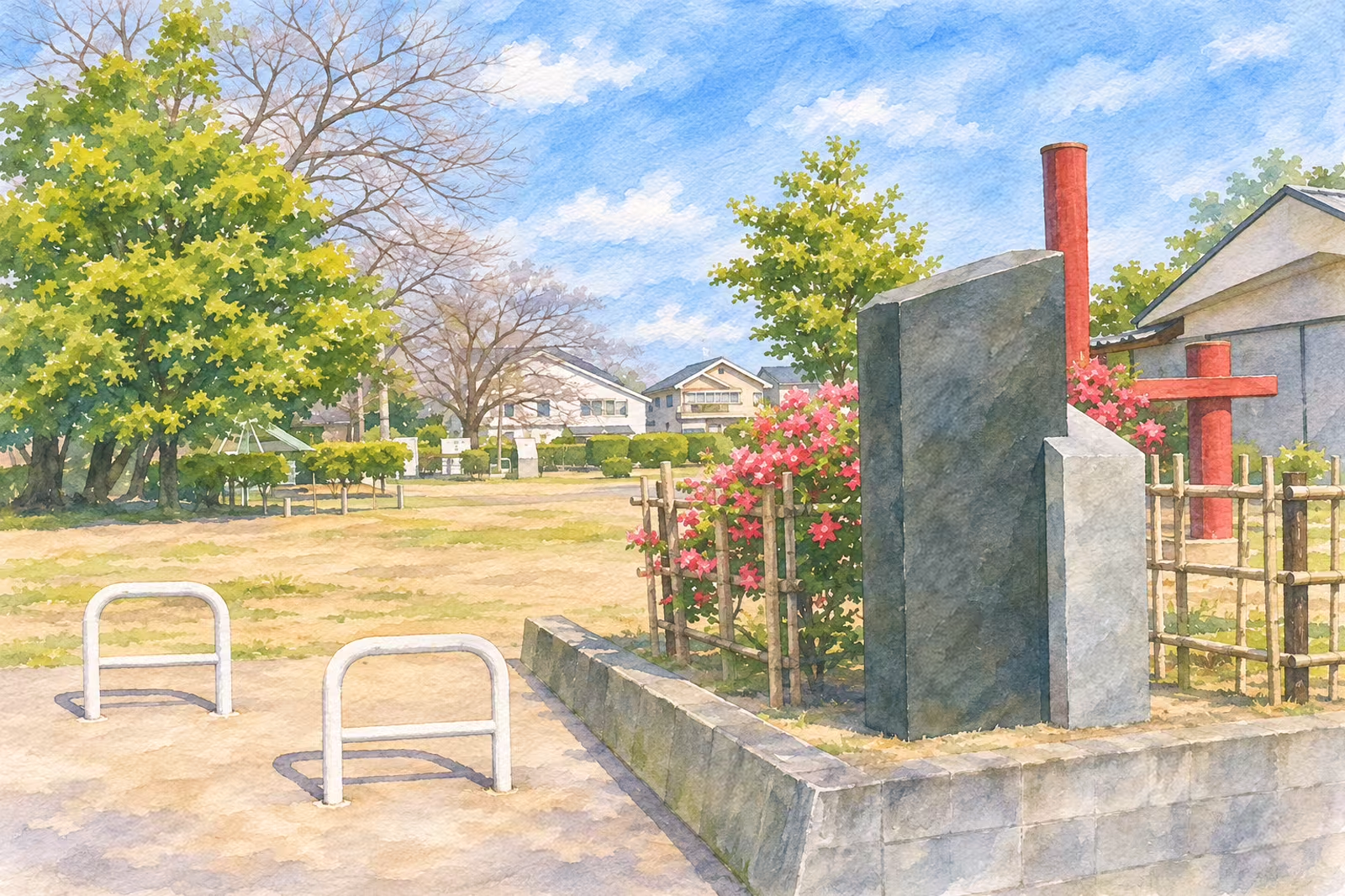
Almost nothing of Nagaoka-kyō remained above ground, and for a long time it was called the "phantom capital." From the 1950s, excavations led by the local scholar Nakayama Shūichi confirmed the site of the Daigokuden (Great Hall of State) and other palace buildings. Excavation has continued ever since, turning up large numbers of wooden tablets (mokkan) and roof tiles. Parts of the Daigokuden and Chōdō-in (State Halls compound) sites in Mukō have been laid out as parks, with restored platforms and marked pillar positions showing where the buildings stood, and the Nagaoka Palace site is designated a National Historic Site. The remains are scattered among residential streets, and no buildings from the period survive.