
The ruins of Sagara Castle lie in Sagara, part of Makinohara City in Shizuoka Prefecture, near the western shore of Suruga Bay. The castle was built for Tanuma Okitsugu, the most powerful shogunal official of the mid-Edo period, as the seat of his own domain. Construction took more than a decade, and less than ten years after completion the shogunate confiscated the castle and pulled it down. Almost nothing stands above ground today, but its brief existence tracks the rise and fall of the Tanuma era.
01Tanuma Okitsugu’s Castle
Tanuma rose as a personal attendant of the shogun and became lord of Sagara in 1758. As he climbed the ranks in Edo, his holdings were enlarged several times. Sagara had previously been administered from a simple jin’ya (domain office), but in 1768 Tanuma received permission to build a castle, and the work was completed around 1780 (some accounts give 1779). The castle had three main enclosures, the honmaru, ninomaru and sannomaru, defended by the waters of the Hagima River and the coast. At the same time Tanuma reorganized the castle town, built bridges, developed the port and opened a road linking Sagara to the Tōkaidō, later known as the Tanuma Kaidō. These projects fit his broader policy of promoting commerce and distribution. According to the records, he governed from Edo and visited Sagara only once after the castle was finished, staying about ten days.
02Confiscation and Demolition
When the shogun Tokugawa Ieharu died in 1786, Tanuma quickly lost power. He was removed from his post as senior councillor (rōjū) and his domain was reduced. In 1787 the shogunate confiscated Sagara Castle, and early the next year every building was dismantled, with the materials sold off or reused elsewhere. Tanuma himself died in 1788. The family passed to his grandson and was transferred to a small domain in Mutsu Province. The Tanuma house returned to Sagara in the 1820s, but governed from a jin’ya and never rebuilt the castle.
03What Remains
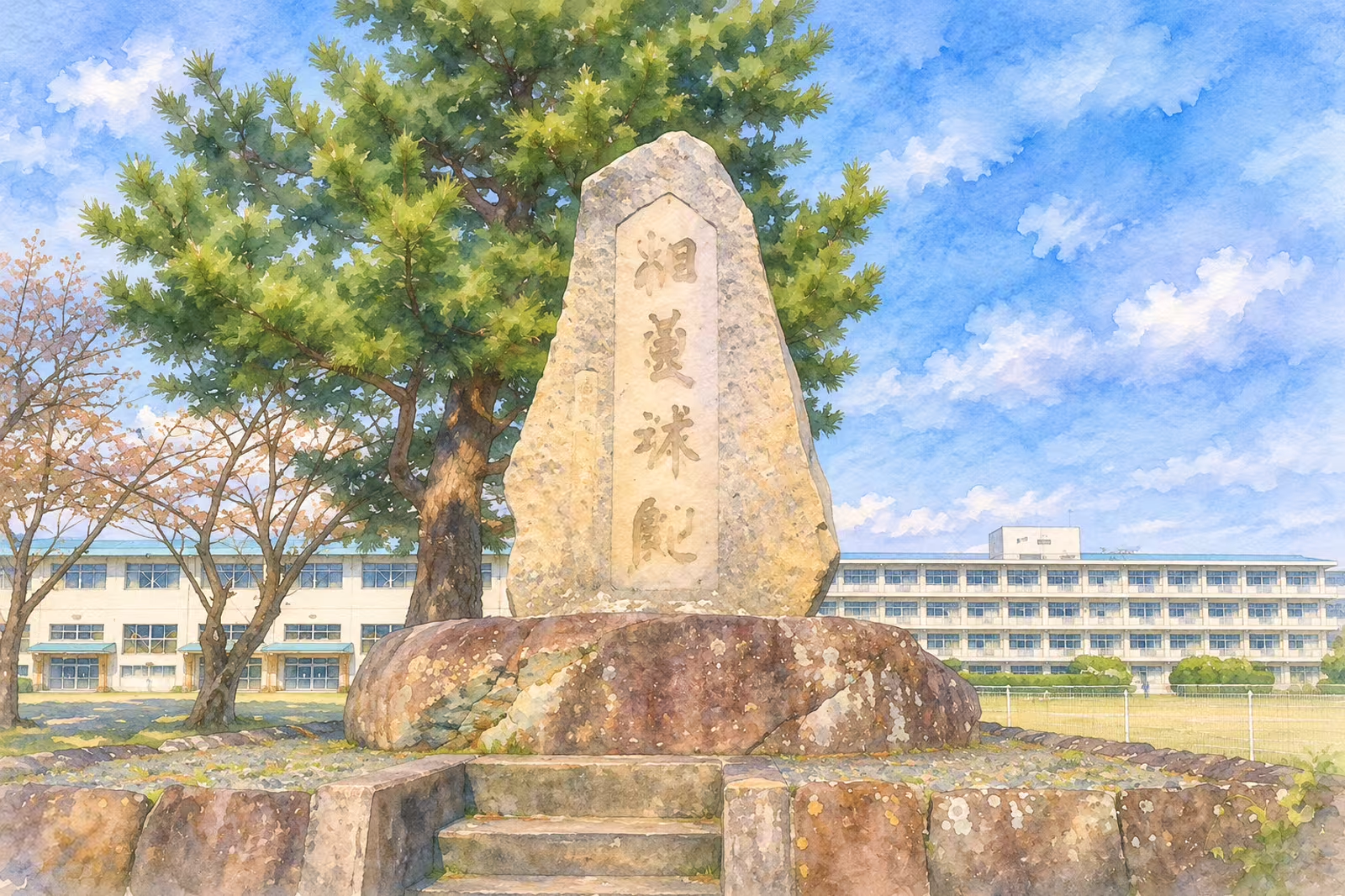
The site of the honmaru is now occupied by the Makinohara City Historical Museum, which displays documents, objects associated with the Tanuma family and plans of the castle. Schools and municipal land cover the other former enclosures, with stone markers indicating where parts of the castle stood. A stretch of stone embankment along the Hagima River, known as the Sendai-gashi, is said to have been built with the help of the Sendai domain under shogunal orders and is one of the few remains connected with the castle. An old pine on the site of the ninomaru is also treated locally as a memorial of the castle. In recent decades local opinion of Tanuma has become more favorable, and the site is often a starting point for reconsidering this contested politician.