
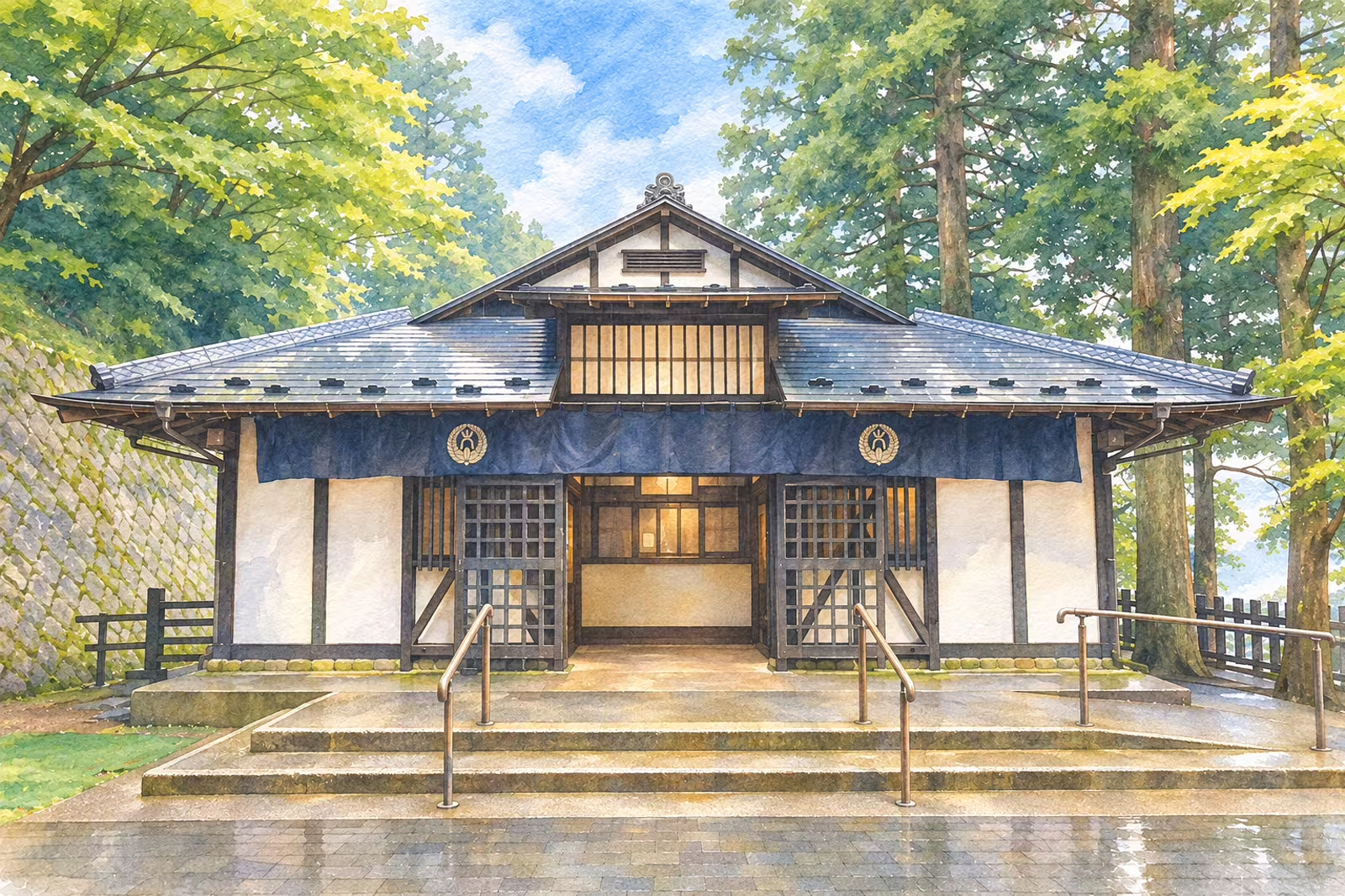
Hakone Sekisho was a checkpoint on the Tōkaidō, the main highway between Edo and Kyoto, maintained by the Tokugawa shogunate on the southern shore of Lake Ashi in the town of Hakone, Kanagawa Prefecture. Together with the Arai checkpoint, it was one of the two strictest barriers on the road, and every traveler had to show a pass and submit to inspection here. The buildings seen today are a reconstruction completed in 2007.
01A checkpoint of the Edo period
The checkpoint is generally dated to around 1619 and was staffed and managed by the nearby Odawara domain. It occupied a narrow strip of ground between the lake and a steep hillside, which made it hard for travelers to slip around it. A gate stood at each end: the Kyōguchi gate on the Kyoto side and the Edoguchi gate on the Edo side.
The purpose of the checkpoints is often summed up in the phrase "guns coming in, women going out": keeping weapons from flowing into Edo and keeping the wives and daughters of daimyo from leaving it. Daimyo families were required to live in Edo, where they served in effect as hostages. At Hakone, women leaving Edo were examined with particular care. They needed a special pass, and female inspectors known as hitomi-onna checked their physical features against the description on the document. Inspection of firearms, by contrast, is generally thought to have been less strict than the phrase suggests. Evading the checkpoint by crossing the mountains, known as sekisho-yaburi, was a grave crime that could be punished by death. The Meiji government abolished the checkpoints nationwide in 1869, and the Hakone buildings were later dismantled.
02The reconstruction
The site was designated a national Historic Site in 1922. In 1983 a detailed record of a major repair carried out in 1865 was found among old documents of the Odawara domain; it gave the dimensions, construction and materials of each building. Archaeological excavation followed between 1999 and 2001 and confirmed where the buildings had stood. Using the record and the excavation results, the checkpoint was rebuilt with traditional techniques, opening in stages from 2004 and completed in 2007.
Visitors today can see the Ōbansho (main guardhouse), the Ashigaru bansho (foot soldiers’ guardhouse), the Kyōguchi and Edoguchi gates, the Tōmi bansho lookout and the fences and stone walls that enclosed the compound. All of these are reconstructions; only the underground remains are original. Inside the Ōbansho, figures recreate the scene of officials inspecting travelers, and the hillside lookout gives a view over the checkpoint and the lake. The adjacent Hakone Sekisho Museum displays travel passes and other documents and objects. Nearby, a stretch of the cedar avenue planted along the Tōkaidō in the Edo period still survives.