JAPANESE CULTURE, EXPLAINED

KCI 306: an export gown reshapes the kimono form

KCI 306, inventory AC13201 2015-5-1, is a Japanese-made at-home gown of about 1906 for Western markets. Its construction adapts a kimono form.

01

Object, design and market

Begin with the particular garment

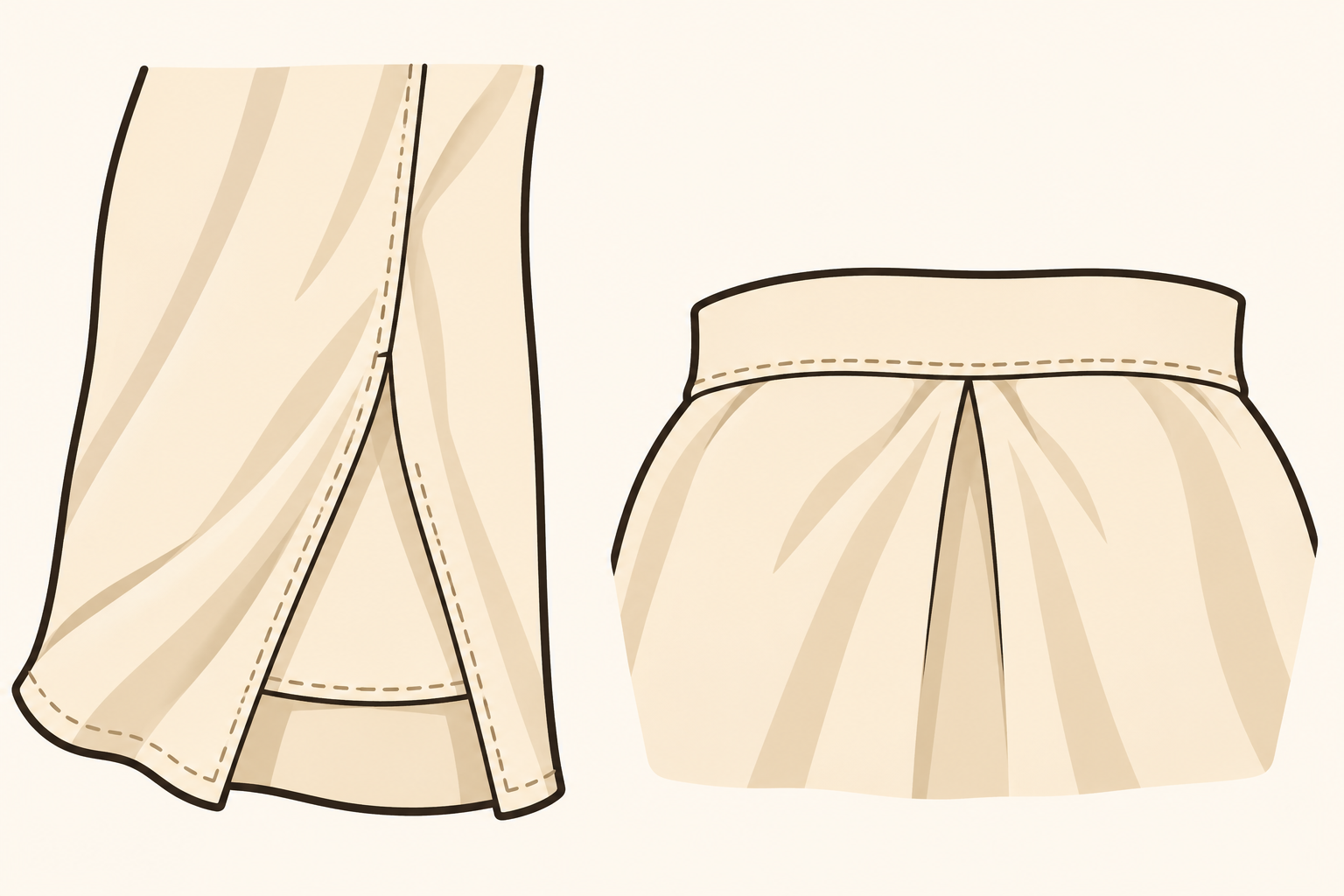
Cream silk satin carries floral and bird embroidery, with padded cuffs and hem. Side gussets and a pleat starting at the back waist alter its silhouette. KCI considers Iida Takashimaya a possible maker; its designer remains unknown.

Illustrative studies of a side gusset and a back-waist pleat, not the object's actual stitching or an exact cutting pattern.

A market for at-home gowns

KCI places the gown within the early-twentieth-century Western vogue for kimono-style indoor clothing. The name travelled while garment shapes adapted. A separately catalogued gray peacock robe provides a different example from that market; it is not another view of 306.

02

Export context and making

Place the object within a trade network

Takashimaya’s corporate archive dates its foreign bulk trade to 1876, followed by a trade department, export shop and a Lyon office in 1899. Its trade business separated in 1916. These developments explain an expanding organisation for overseas textiles without establishing a production record for this individual gown.

A design can pass between different specialists

The archive preserves other paired examples of paintings and textile production: a drawing by Imao Keinen and a yuzen wall hanging made by Murakami Kahei show distinct contributions to an export textile. Designers, textile makers and merchants could perform different tasks. Neither named artist is thereby established as the maker of 306.

Check your understanding

What changes the garment’s silhouette?

Side gussets and a pleat beginning at the back waist.

What does the 1899 Lyon office document?

A stage in Takashimaya’s overseas trade organisation, rather than proof it made this gown.

Did design and textile production have to be one person’s work?

No. The archive’s paired drawing and textile identify different contributors.

Sources and images
  1. Kyoto Costume Institute: export gown 306
  2. Wikipedia: Japonisme
  3. Takashimaya Archive: company chronology
  4. Takashimaya Archive: drawings and textiles
  5. Takashimaya (2020): textile exhibition
  6. Japan Design Resource: peacock export robe