Fireflies in Japan: stream, wetland and woodland lives
ホタル
Hotaru is the Japanese name for fireflies, a family of beetles. Familiar Japanese names such as Genji, Heike and Hime identify different kinds. Their larvae do not all live in water: Genji and Heike larvae are aquatic, while Hime larvae live on the forest floor. Species, life stage and habitat need to be understood together.
Genji larvae live in flowing water; Heike larvae occur in habitats such as rice fields and wetlands.
Hime larvae live on land and hunt land snails.
Flight, flashing and seasonal appearance vary by species and locality.
01
Three names reveal different habitats
Genji: larvae in flowing water
Genji larvae live in flowing freshwater, including streams, and prey on aquatic snails such as kawanina. Mature larvae leave the water and enter bank soil to pupate before emerging as adults. Protecting the water alone therefore misses the landward part of their life cycle.
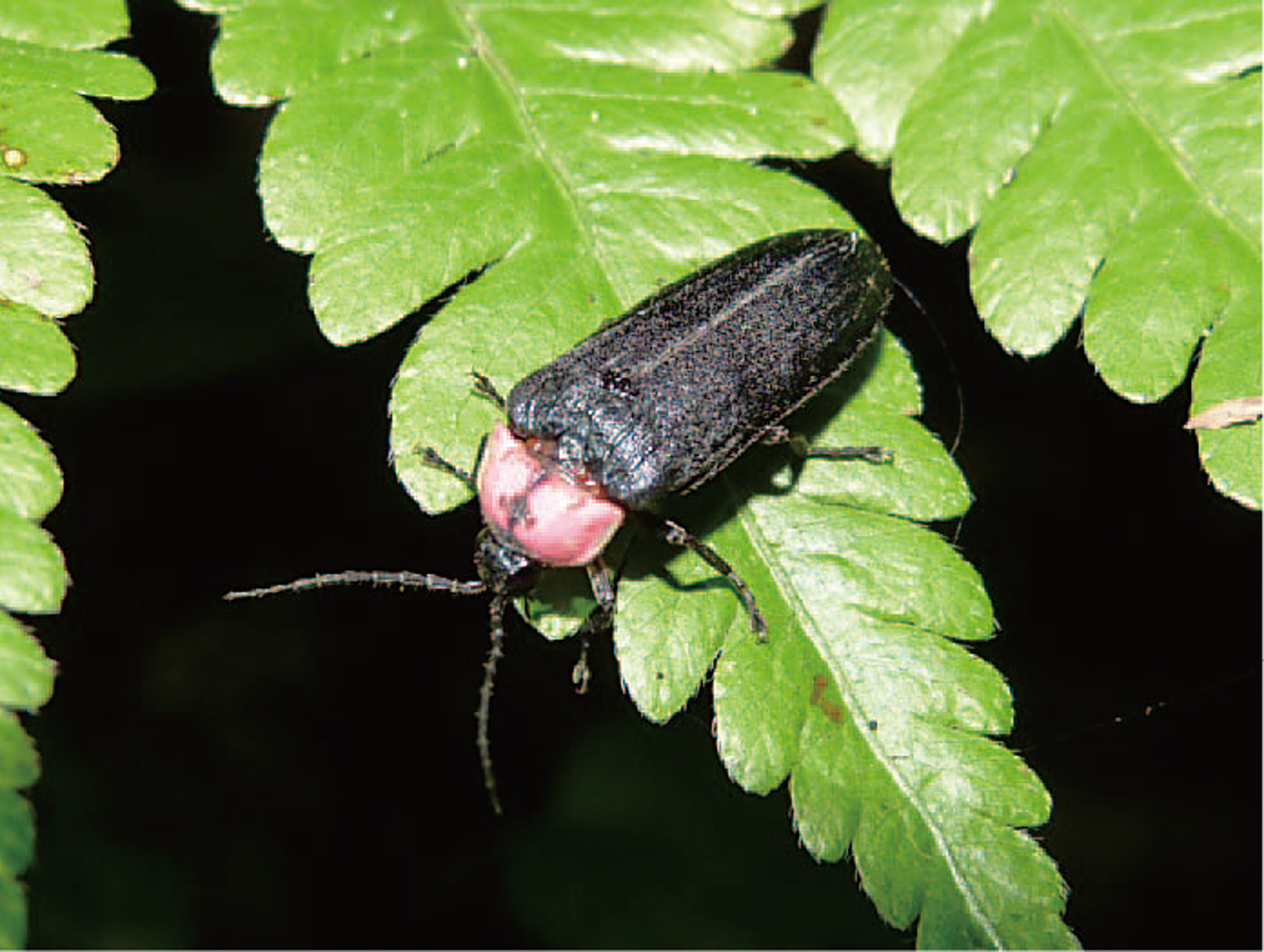
Genji larvae live below the water surface, among stream stones and aquatic snails. Bank soil lies above the water.An adult Genji firefly photographed in Fukuoka City’s species account.
HO habitat illustrations are schematic and not to scale. The larvae are simplified dorsal views with legs hidden beneath their bodies, rather than identification drawings.
Heike: rice fields and wetland water
Heike larvae occur in still or slow-water habitats such as rice fields, wetlands and channels. They eat aquatic snails and later move onto land to pupate. Both Genji and Heike depend on water, but their habitat requirements should not be reduced to the same stream scene.
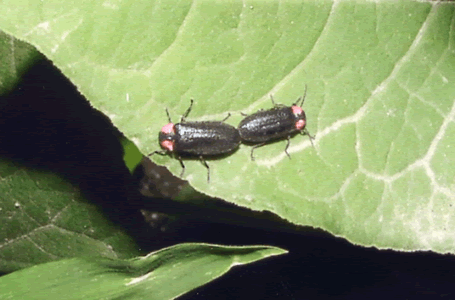
A Heike larva below still rice-field water, with mud and an aquatic snail.Heike adults in Environment Ministry material. The original photograph is small.
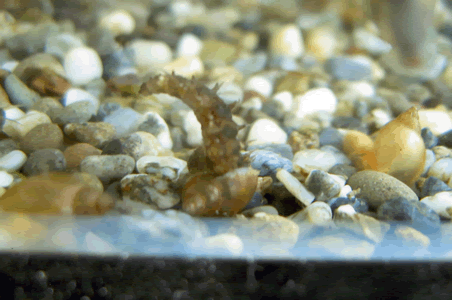
A Heike larva in the same Ministry material, partly hidden among snails and substrate.
Hime: larvae on the forest floor
Hime larvae live on land and eat terrestrial snails. Minamisanriku’s museum explains that both sexes glow, but only males fly; females are flightless. This species shows why neither aquatic larvae nor glowing flight is a rule for every Japanese firefly.
A Hime larva and land snail among fallen leaves on the forest floor.Hime firefly photographed on 8 July 2004, published by Minamisanriku’s museum. A still photograph does not establish its flash pattern or sex.
Life stages without one national calendar
Fireflies pass through egg, larval, pupal and adult stages, but their timing and habitats vary. For Genji and Heike, aquatic larvae are followed by pupation in bank soil and adult emergence. Hime larvae already live on land. These three examples explain important differences rather than providing a complete list of Japanese species.
Genji and HeikeAquatic larvae → leave the water to pupate in soil
HimeLarvae already live on land
Body size and the marking behind the head
The Environment Ministry’s guide gives adult Genji an approximate length of 15–18 mm, with a black cross on the pinkish pronotum, the plate behind the head. Heike are smaller, about 8–10 mm, with a lengthwise black mark in the corresponding area. These visible features help distinguish the adults alongside habitat; the size ranges are guides rather than a measurement-only identification test.
Adult Genji and Heike comparison from the Environment Ministry manual, retaining the original Japanese labels.
GenjiAbout 15–18 mm; a black cross on the pronotum
HeikeAbout 8–10 mm; a lengthwise black mark on the pronotum
A Genji life cycle links water and bank
Moriyama’s firefly museum describes adults exchanging light signals and mating, followed by females laying eggs on moss near the water. Newly hatched larvae enter the water, feed on kawanina snails and grow through repeated molts. Mature larvae crawl ashore on rainy nights, enter soft soil, form earthen chambers and pupate. The emerging adults return to activity beside the water. The cycle links moss, aquatic habitat and bank soil.
Eggs beside the water
Eggs hatch on moss; the larvae enter the water.
Larvae in the stream
They feed on aquatic snails and grow through molts.
Leaving water and pupating
A mature larva crawls ashore and pupates in an earthen chamber. Two successive moments share this scene.
Adults beside the bank
After emergence, adults become active among waterside vegetation.
HO illustrations based on Moriyama’s Genji life-cycle account, with stages enlarged for clarity. The museum’s original diagram below includes its local calendar.
Original Genji life-cycle illustration from Moriyama’s firefly museum.
Feeding changes between larva and adult
The river authority’s Genji account describes a larva gripping a snail with its mandibles and drawing it into a sheltered gap. Digestive fluid liquefies the flesh, which the larva absorbs. After the later stages of growth and pupation, the adult relies largely on reserves accumulated as a larva and takes in little beyond water. Feeding and growth prepare for the adult reproductive stage.
1. Grip the exposed soft body at the shell opening.2. Keeping its grip, the larva backs tail-first into the gap on the left, drawing the snail along. The shell remains outside at this moment.
HO process illustrations with behavior from MLIT’s Otagawa account and larval form informed by its Sendai River photograph; not to scale. Digestion and absorption are explained below, without a drawing of internal organs.
Genji larvae in a photograph from Moriyama’s museum. This still does not show the full feeding sequence.
Grip the snailWith the mandibles
Move into shelterDraw it into a protected gap
Digest and absorbDigestive fluid liquefies the flesh
02
Producing and recognizing the light
A reaction inside the insect
Firefly light comes from an oxidation reaction involving luciferin and the enzyme luciferase. Oxygen, magnesium ions and ATP are also required; ATP is one of the energy sources used by living organisms. The insect produces the light chemically rather than simply reflecting light that falls on its body.
Luciferin and luciferaseParticipants in the light-producing reaction
Oxygen, ATP and magnesium ionsAlso required for the reaction
Light emittedProduced chemically within the insect
These are reaction participants and the result, rather than a complete chemical equation.
Light helps adults find mates
In Genji and Heike, the light organs lie on the underside of the abdomen. Nobeoka’s account connects synchronized adult Genji flashes with males finding females and mating. Light acts as a signal, with patterns differing among species and populations. The family also includes species whose adults scarcely glow, so conspicuous nighttime flashing is not shared by every adult firefly.
UnlitBrighter lightWeaker light
Light states of the same generalized adult, with light on the abdominal underside. Brightness is conceptual; these are not three species portraits.
Flash patterns differ
The Environment Ministry contrasts Genji’s generally stronger, more widely spaced flashes with Heike’s weaker, shorter flashes; Minamisanriku describes Hime’s strong yellow, strobe-like flashes at short intervals. Genji populations also differ from one another. A Nagasaki University report in 2020, based on roughly 40 sites, identified populations in the Goto Islands flashing about once a second, alongside previously known four-second eastern, two-second western and three-second intermediate patterns. Flashing is an identification clue, not a nationwide stopwatch rule.
Genji: stronger flashes, longer gaps
Heike: weaker, shorter flashes
Time runs left to right. Bar width represents duration and height represents relative strength. This is the Environment Ministry guide’s qualitative comparison, not measured traces or a universal rhythm; there is no seconds scale.
● ● ●
Hime: Minamisanriku describes strong yellow, strobe-like flashes at short intervals. Dots mark repeated flashes without encoding duration; this separate example shares no time scale with the strips above.
Goto IslandsAbout one second in the 2020 report
Previously known patternsEastern: about four seconds; western: two; intermediate: three
These intervals describe particular populations and are separate from the qualitative strips.
A local season is not a national timetable
Minamisanriku records Hime activity from early to late July. An account of kinbotaru around Tennō Hachiman Shrine in Okayama points to roughly July 10; kinbotaru there means Hime. These are local seasonal observations, with timing varying by place and year.
Hime in MinamisanrikuEarly to late July
Kinbotaru around Tennō Hachiman ShrineAround 10 July in the local account
03
Viewing, protection and monitoring
An Edo-period image of catching fireflies
Kitagawa Utamaro’s eighteenth-century print Hotarugari records women catching fireflies with round fans, according to its collection description. It provides a historical example of firefly recreation.
Kitagawa Utamaro, Hotarugari, eighteenth century: one sheet of a triptych, showing women catching fireflies with round fans.
Moriyama: visitors arrived, fireflies were sold
Moriyama’s firefly museum describes dealers trading live fireflies in the Meiji period and special trains bringing visitors from Kyoto, Osaka and Kobe during Taishō and early Shōwa. People travelled to see the insects, while insects also travelled to city markets. Shiga’s archives explain that a 1920 report linked sales and excessive capture to declining numbers and noted protection work by a local youth association. In 1924, rivers in Moriyama and Monobe received natural-monument designation as Genji firefly habitats. This local history of capture and trade is distinct from the later pressures of polluted water and altered habitat.
Sakuraiya, a firefly dealer, in a photograph published by Moriyama’s museum. The museum identifies the business; the photograph is undated.
Meiji periodFirefly dealers operated locally.
Taisho to early ShowaSpecial viewing trains brought visitors from the Kyoto–Osaka–Kobe area.
1920–1924A 1920 report described city sales, excessive capture and youth-group protection; local rivers received designation in 1924.
A habitat designated in 1959
Okayama designated the kinbotaru emergence site in the Tennō Hachiman Shrine grove as a prefectural natural monument in 1959. The designation connects the insects with a particular habitat, extending attention beyond the brief spectacle of luminous adults.
The shrine grove in Okayama’s designation document. The photograph is undated; 1959 is the designation year.Tennō Hachiman Shrine in the same document.
Moriyama: local decline and conservation work
Moriyama in Shiga records that environmental change brought its fireflies close to disappearance; the habitat’s national natural-monument designation was removed in 1960. Residents later undertook rearing, protection and river maintenance. A city ordinance established nine protected areas in 2000, expanding protection to all city rivers in 2013. This is a local history of decline and several conservation measures, including artificial rearing.
1960National natural-monument designation removed
2000Nine areas protected under a city ordinance
2013Protection extended to all city rivers
These dates concern conservation arrangements, not measured population recovery.
Why vegetation, moss and soil matter
Genji require aquatic habitat for larvae and prey, accessible bank soil for pupation, moss for eggs, and vegetation where adults can rest. Moriyama therefore includes vegetation management and riverbank conditions in its conservation arrangements. Each life stage uses a different part of the site. Seeing luminous adults on one night does not by itself establish that all those conditions are intact.
In the water: larvae need conditions for feeding and growth. Reused Genji life-cycle illustration.Bank soil: leaving the water and pupating underground, shown as successive moments. Reused Genji life-cycle illustration.
MossA place for eggs
Water and preyLarval feeding and growth
Bank soilLeaving water and pupating
VegetationAdult resting places
Counts need environmental context
This Environment Ministry protocol primarily targets Genji and Heike, counting their adults separately in defined plots from about half an hour after sunset. At fixed points, observers make roughly three consecutive counts and retain the largest. Repeated seasonal visits record time, weather, temperature and wind; methods remain consistent between years. A surveyed plot with none seen receives zero, whereas an unvisited plot is marked not surveyed. These are observations of adults under specified conditions, not totals for all life stages; sites stocked with fireflies or their snail prey are excluded.
An observer records on paper from a path, avoiding artificial light during the count. No catching or release is part of this illustrated survey.
Define plots and timingFrom about half an hour after sunset; count Genji and Heike separately
Count about three timesRetain the largest count
Repeat through the seasonRecord time, weather, temperature and wind; keep methods consistent
ZeroSurveyed, but no adults seen
Not surveyedNo observation from this visit
Check your understanding
Where do Genji, Heike and Hime larvae live?
Genji and Heike larvae are aquatic, whereas Hime larvae live on the forest floor and eat land snails.
Why do Genji need suitable banks as well as water?
Mature larvae leave the water and pupate in soil on the bank.
Do fireflies merely reflect moonlight?
No. A chemical reaction involving luciferin, luciferase and other requirements produces their light.
Can a July 10 viewing date be used throughout Japan?
No. It describes a particular species and place. Other localities and years need their own information.
How does a Genji life cycle connect moss, water and bank soil?
Eggs are laid near water on moss; larvae enter water to feed and grow, then crawl ashore to pupate in soil. Adults communicate, mate and lay eggs beside the water.
Why is one flash interval insufficient for Genji across Japan?
Populations of the same species differ. Goto observations added an approximately one-second pattern to the known two-, three- and four-second patterns.
How does zero differ from not surveyed in a monitoring record?
Zero means observers surveyed the plot but saw no adults. Not surveyed means that visit produced no observation; it cannot establish absence.
Feeding behavior follows MLIT’s Otagawa account; larval form also draws on its Sendai River photograph; the Sakuraiya photograph is from Moriyama’s museum. Habitat, life-cycle and light-state illustrations: HO, based on the named references; larvae are simplified and not to scale. Genji adult photograph: Fukuoka City. Heike photograph and adult comparison: Environment Ministry. Hime photograph: Minamisanriku. Genji larvae and original life-cycle diagram: Moriyama museum. The Utamaro image is one triptych sheet from the named Cultural Heritage Online entry. Grove and shrine photographs are details from Okayama’s designation document.