JAPANESE CULTURE, EXPLAINED

Fūshikaden: the performer’s flower changes with age and occasion

風姿花伝

Zeami’s Fūshikaden develops teachings about Noh from the practice of his father, Kan’ami. It considers training, roles, writing, audiences and the performer’s flower. Its familiar seven-part form emerged through years of composition and separate transmission rather than one public textbook written at once.

01

How the treatise took shape

Seven parts have a layered history

The first three parts carry a 1400 authorial colophon, followed by additions and revisions. The Japan Arts Council distinguishes Zeami’s title for parts one to five from the separately written and transmitted sixth and seventh parts. The seven parts cover different subjects; the seven ages of training belong within the first part. Part one concerns training through life; two studies nine role types; three uses questions and answers about performance; four relates origin traditions; five considers varied styles and audiences; six addresses scripts, acting and artistic rank; seven concentrates on flower.
02

Training, flower and performance

Training responds to a changing performer

Age-related practice begins at seven with encouragement of song and movement. At twelve or thirteen, youthful appeal is treated as temporary; at seventeen or eighteen, changing voice and body require persistence. Later warnings concern applause mistaken for mastery and the adjustment of effort in older age. These are historical theatrical prescriptions rather than a modern biological timetable.

LevelDistinction
Seven partsThe structure of the text
Ages in the first partLearning and adjustment through a performer’s life
A surviving manuscriptBinding, copying and transmission have their own histories
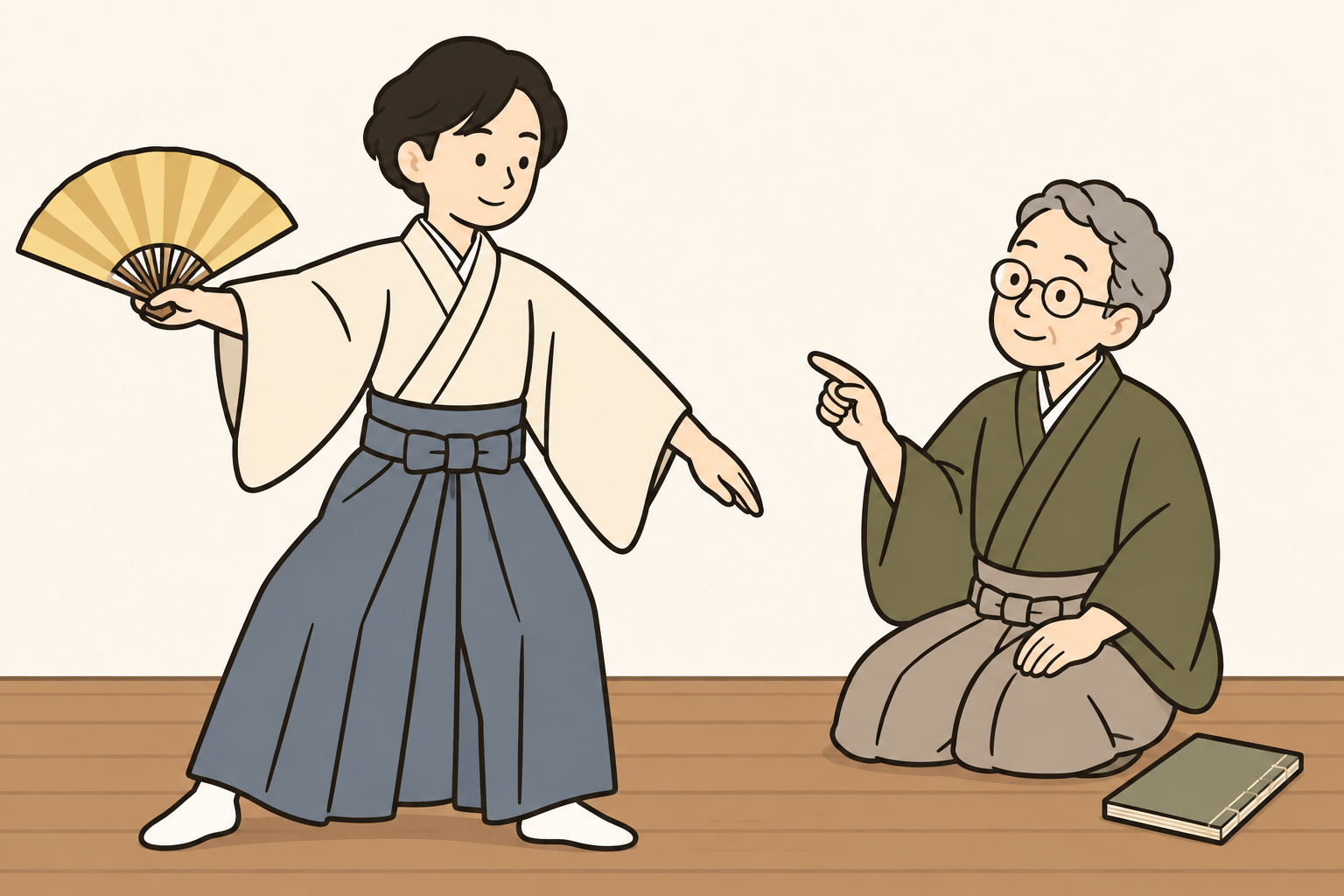
Practice, observation and guidance. An illustrative Noh training scene, not a portrait of Zeami.

Flower involves an audience

Flower is more than attractive appearance. Freshness, cultivated skills and the occasion matter together. Youthful appeal can fade, while learning roles and developing a repertoire provide other resources. The performer must judge audience and circumstances rather than assuming that repeating a successful action will always have the same effect.

Secrecy concerns expectation

The seventh part connects withheld knowledge with an audience’s experience of novelty. It sits beside practical discussion of scripts, roles, performance and timing. Reducing this to a maxim that keeping secrets guarantees success removes its theatrical setting. Later motivational uses are adaptations rather than substitutes for the argument.

03

How manuscripts shape reading

The manuscript is another historical layer

The Kanze collection’s five-volume manuscript at the University of Tokyo is a late-Muromachi copy bearing Sōsetsu’s signature, not Zeami’s autograph of all seven parts. Separate sixth- and seventh-part autographs preserve further transmission histories and textual differences. A copied authorial colophon does not date the physical manuscript.

A different stage came with Yoshida Tōgo’s edited Zeami Jūrokubushū, published by Nōgakukai in February 1909. Publication brought teachings long transmitted within Noh lineages to a broader readership. The printed edition and a surviving manuscript have different histories.

Check your understanding

Are the seven parts seven age stages?

No. Age-based training is within the first part; the other parts concern additional theatrical subjects.

Does youthful popularity establish mature skill?

The text warns against confusing temporary youthful appeal with sustained accomplishment.

Must a copy with a 1400 colophon have been copied in 1400?

No. A later copy can preserve the earlier text’s authorial colophon.

Sources and images
  1. Japan Arts Council: Fūshikaden’s seven parts
  2. Tokyo University: five-volume manuscript
  3. Hosei Noh Institute: Zeami texts
  4. Wikipedia: Fūshikaden
  5. Tokyo University: sixth-part autograph
  6. Tokyo University: seventh-part autograph
  7. Hosei Noh Institute: searchable Fūshikaden
  8. Hosei: text conventions and limitations
  9. NDL: Yoshida’s 1909 Zeami edition
  10. The Noh: Fūshikaden and public reception